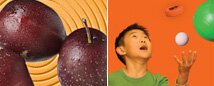
Fruits and Vegetables to Help Build a Healthy Baby
Thinking of having a baby? Want to give your baby a health advantage? Eating five or more fruits and vegetables a day is a good way to start.
Why fruits and vegetables?
Eating plenty of fruits and vegetables gives you the vitamins and minerals you and your baby need to be healthy. Fruits and vegetables with
vitamin C
help you and your baby have healthy gums and other tissues, and help your body heal wounds and absorb iron. Choose strawberries, melons, oranges, papaya, tomatoes, peppers, greens, cabbage and broccoli for vitamin C.
Dark green vegetables have
folate
,
vitamin A
and
iron
- important nutrients during pregnancy. The vitamin A found in fruits and vegetables (carotene) is safe to eat, but you should avoid eating foods high in vitamin A, such as liver, liver sausage and cod liver oil. Very high intakes of vitamin A (retinol) during the first few weeks of pregnancy may harm your baby.
Dark leafy greens, asparagus, peas, broccoli, oranges, cantaloupe, berries, lentils and whole grain or enriched breads or cereals provide the nutrient folate. All women who could become pregnant should take a supplement of 0.4 milligrams of folic acid (the supplement form of the nutrient) every day and eat foods rich in folate. Low intakes of folate have been linked to heart disease, hypertension, cancer, Alzheimer's and other diseases. Folate is also essential to prevent some neural tube defects (a group of serious birth defects), including spina bifida.
Fruits and vegetables also provide the fibre pregnant women need, along with protective factors called “phytochemicals” which reduce your risk of heart disease and some cancers. See the tip sheet on
Phytochemicals
for more information.
What if I’m already pregnant?
Continue to eat the minimum number of servings from each of the food groups. Depending on your age and activity level you may need to eat more. If you do, choose vegetables and fruits, grain products and milk products. Continue to take your folic acid supplement at least through the first trimester. Eat small, frequent meals. This may lessen some of the discomforts of pregnancy such as heartburn.
Some fruits and vegetables give me heartburn. What can I do?
-
Choose a variety of fruits and vegetables that you can eat without discomfort. These may change over the course of your pregnancy. Try small amounts to see how you feel before increasing quantities.
-
Eat several small meals and snacks over the day rather than 1 or 2 larger meals.
-
Drink fluids at least 30 minutes after your meal rather than with the meal.
-
Don’t lie down after a meal. Sit, stand or walk to help food settle.
-
Wear loose clothing. Clothing that is tight can cause discomfort after eating.
I don’t have room for lots of fruits and vegetables!
-
Eat several small meals and snacks every day. Try to have a fruit or vegetable at each one. A serving of fruits or vegetables is 1/2 cup – about the size of a tennis ball.
-
Have a piece of fruit at your mid-morning break.
-
Move some of your lunch veggies to an early afternoon snack.
-
Add a serving of vegetable juice or some vegetable soup to a later afternoon snack. Make this the appetizer for dinner (at least an hour later).
-
Take some carrot and celery sticks along to crunch on your walk.
-
Microwave a sweet potato or have fruit with yogurt for your evening snack.
-
For more ideas, check out
tip sheet
Making Room for Fruits and Vegetables
.
Developing the fruit and vegetable habit is a healthy change that will benefit your whole family. After your baby is born, how your family eats will influence your baby’s choices and eating habits. By eating more fruits and vegetables now, you’re helping to build a healthy baby and setting a pattern of healthy eating for a lifetime.
Eat the minimum number of servings from each of the food groups in
Canada
's Food Guide to Healthy Eating every day. Unfortunately 50-75% of BC women in their childbearing years don't get the minimum recommended servings of fruits and vegetables, grain products or milk products. This means they may not get all the nutrients required for a healthy pregnancy.
Your pregnancy is an opportunity to work towards your healthy eating goals. The changes you make now will set the scene for continued healthy eating for yourself and your baby.
Links:
Canada's Food Guide to Healthy Eating and Physical Activity
Dial-A-Dietitian
Baby’s Best Chance